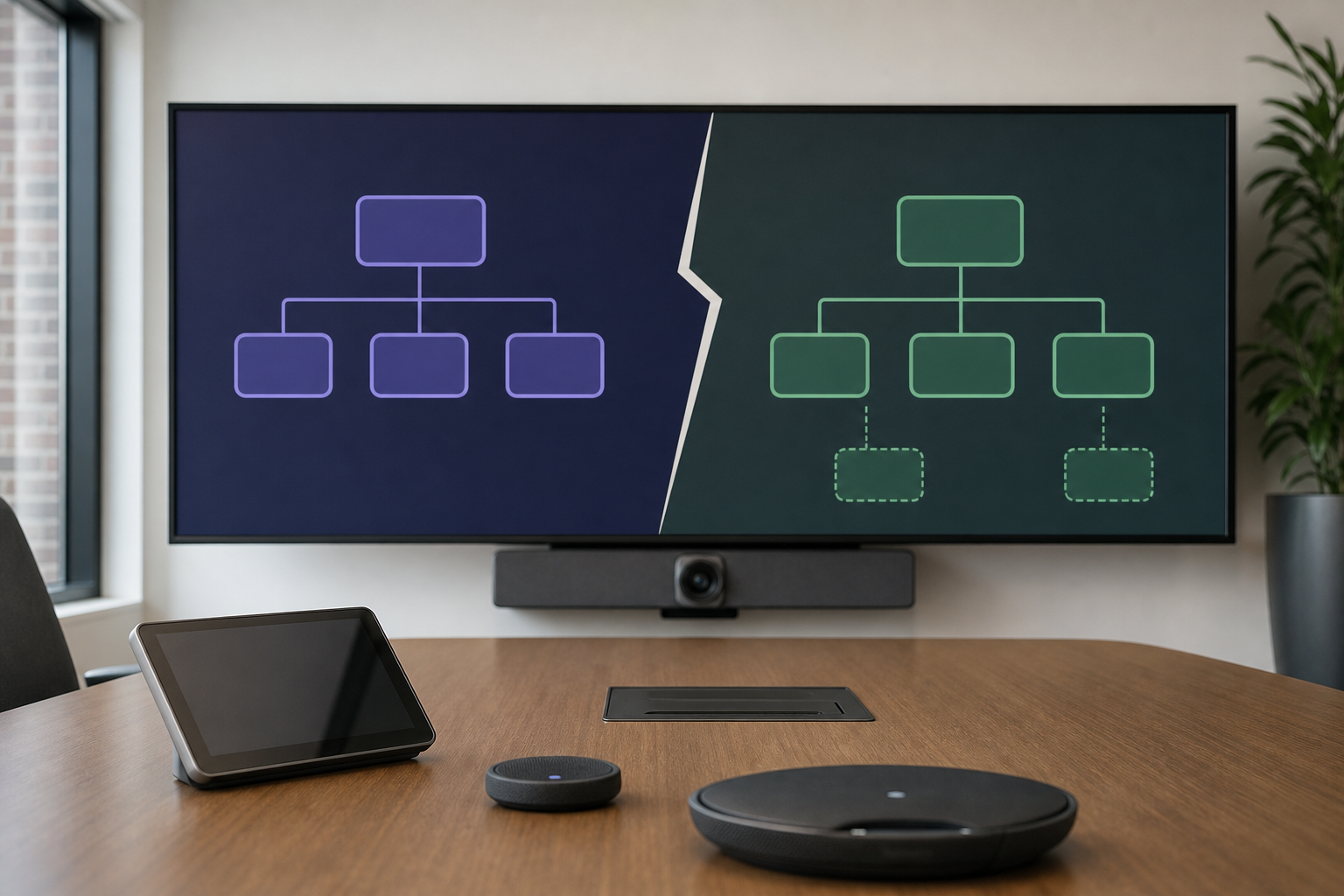
The confusing part of Microsoft’s Android device change is not that a new portal exists. It is that the same device can now have two different operational truths depending on which task you are trying to complete.
Microsoft says management of Teams Rooms on Android, Teams phones, and Teams panels is moving from Teams Admin Center (TAC) to the Teams Rooms Pro Management portal (PMP). For Android provisioning and update workflows, PMP is becoming the primary destination. Some device-management coverage may still appear in TAC during the transition, but that does not make TAC the best place to run day-to-day operations.
That creates a familiar failure mode: support teams look in TAC, see an enrolled device, and assume they are looking at the authoritative state. Meanwhile, update control, provisioning steps, and newer management paths are already centered in PMP. The device is not necessarily mismanaged; the operating model is misaligned.
A better rule is to separate discovery from control. Use TAC to understand where a device came from and PMP to decide what happens to it next. If you do not redraw that boundary, the first thing to drift is usually patching or troubleshooting, because the runbook points one way while Microsoft has moved the control plane another.
For mixed estates, this is a governance issue only after it is a support issue. The teams most affected are the ones handling incidents, scheduling updates, and onboarding new rooms or panels. They need one current workflow, not two half-true consoles.